This transcript has been lightly edited for readability.
Michael Perrior: Good morning everyone, and welcome. My name is Michael Perrior from My Databoss. Thank you for making the time on a Friday morning to join us. A few things before we get started. We are recording this session and will send it out to you afterwards. If you have any questions, please pop them into the Q&A and we'll get to them towards the end. One note before we begin: today's session is general information, not legal advice. If you need specific legal advice about your own situation, please speak to your own adviser.
So where are we at? Since 1 July, Tranche 2 AML/CTF obligations have applied to legal, accounting and real estate businesses that provide a designated service. That's a big change for a lot of businesses that have never had to think about this before. From what I'm hearing from the businesses we speak to, many have accepted that it's here to stay, and the question has moved from 'do we have to?' to 'how do we make this work for our business?' The regime is still bedding down, and AUSTRAC has already started to act. So today is about what comes next and how to get ahead of it.
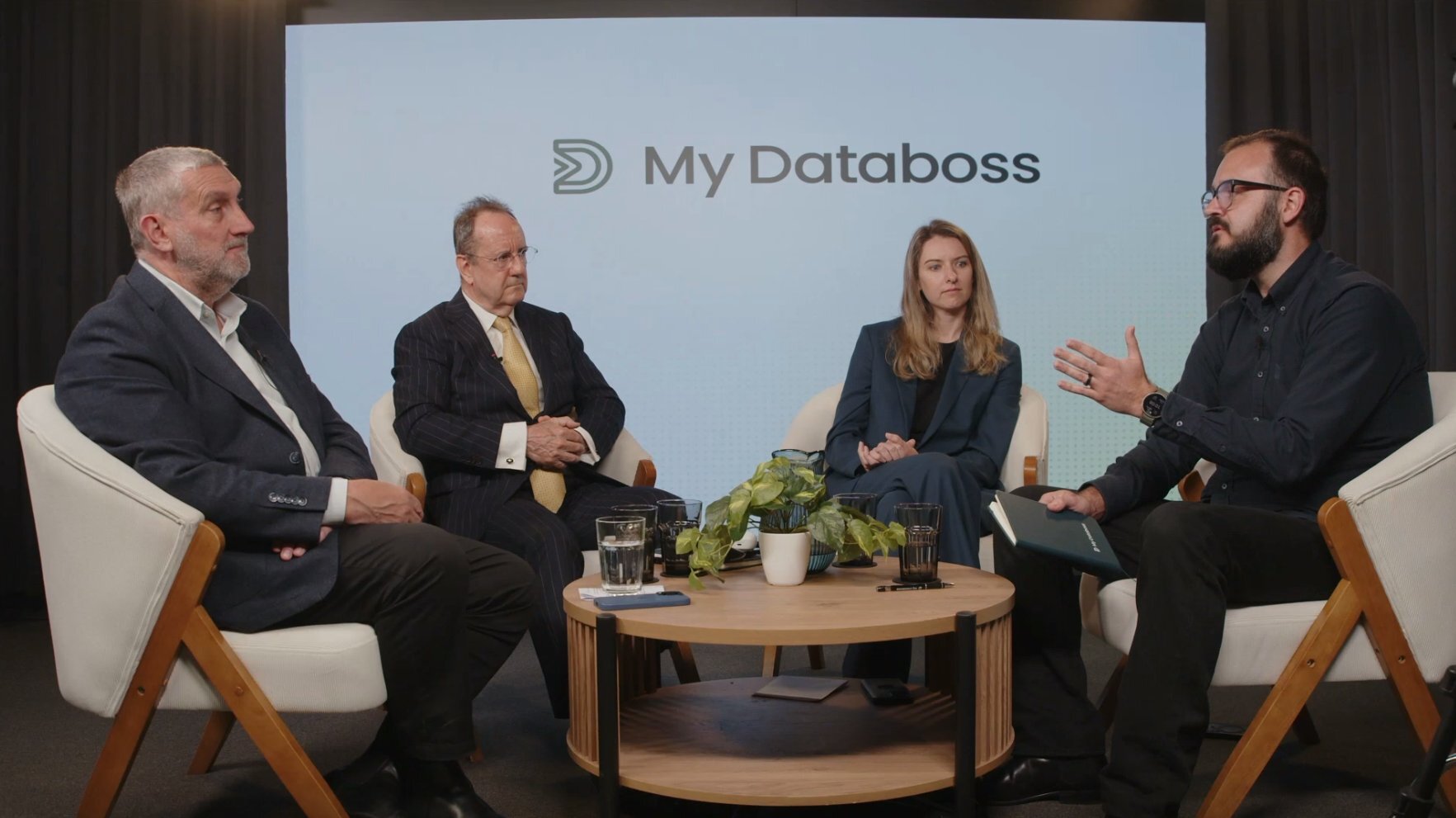
I'm lucky to have three people with me who see it from different angles. First is Rolf Howard, CEO and commercial litigation lawyer at Owen Hodge Lawyers. Owen Hodge got ready early, so Rolf can tell us what that looks like from the inside. Welcome, Rolf.
Next is Dr Craig West, Executive Chairman of Succession Plus. Craig spends a lot of his time with business owners working out what their business is worth and what could be putting that value at risk. Welcome, Craig.
And Greta Menzies, founder and CEO of My Databoss. Greta and her team help businesses turn their AML/CTF programs into something that runs day to day. Welcome, Greta.
We'll cover three topics today. First, what comes next for AUSTRAC. Second, how to make compliance work in practice, including the common hurdles and how to get past them. Third, how this can work for your business. We'll keep time at the end for your questions. So let's get started.
What is coming next for AUSTRAC? Let's start with the regulator: what is AUSTRAC likely to do next, and how should we be ready for it? Rolf, I'll start with you. As a lawyer, what has AUSTRAC done since 1 July that indicates how it intends to supervise the sectors?
Rolf Howard: As at 28 July, a large number of professional services firms, the gatekeeper firms, had enrolled as required, but a substantial percentage had not. Those of us who have enrolled have not heard from AUSTRAC since. That indicates, fairly logically, that AUSTRAC's priority is those who have not enrolled. That group includes some people who should have known better, a large group who are so small that they are focused on the day to day and haven't been able to get on top of the requirements, and the baddies. AUSTRAC, one would assume, cannot afford to let the baddies sit outside the grid, so it has to run them down. The fact that those of us who enrolled are not hearing from AUSTRAC indicates that this is its priority.
We can also learn from history. Under the original 2006 regime, the regulator did not engage with organisations that thought they were doing the right thing for some years. So those of us who are enrolled, and hopefully doing the right thing, won't find out for some time.
Michael Perrior: Thank you for that insight. Craig, I'll bring you in. What feedback are you hearing from the businesses you're talking to at the moment?
Craig West: In the business community generally, any change like this has an impact on the owners and on the operations of the business. There's been a lot of change recently, and not just in this area. There's Payday Super, the economy generally is a bit all over the place, and interest rates have gone up. So business owners are sometimes overwhelmed.
I think Rolf's categorisation is really good. There are businesses that have enrolled, done what they need to do and put a system in place, and it's all working okay. There's a large group who are a bit overwhelmed and probably haven't got to it yet, even though they should have three months ago. And there's a group that are never going to do it, because they don't care, they refuse, or they think it's not their problem.
Generally speaking, though, business owners are pretty adaptable. They have to be, otherwise they wouldn't be in business. They learn and they work out what they need to do. The key is to get the right advice and talk to people who know what to do. Most people go into business because they're good at one particular thing. I'm a good air conditioning mechanic, or I'm a good lawyer. That doesn't necessarily make you a good businessperson, and it certainly doesn't mean you know a lot about finance or what we're talking about today. So it's about who you go to for the right advice, what system you use and how you make it work.
Michael Perrior: Are you coming across any common misunderstandings about the rollout?
Craig West: With any change, yes. Payday Super is a good example. I spoke to a client the other day who said, 'We're not doing that.' I asked what he meant, and he said their cash flow doesn't support it, so they'll keep doing it the way they used to, and if and when somebody finds out, they'll sort it out then. I thought that was a really interesting approach. It's almost as if some business owners think these rules are flexible and don't really apply to them.
Payday Super is completely different to AML, but it's also very similar. It's a government change. It's legislation. It's been announced and promoted by everybody. All the accounting packages talk about it, and every accountant on earth has told their clients they have to do it. And some business owners still say, 'I'm not going to do that. It doesn't suit me.' Well, whether it suits you isn't the point. That's not what it's for.
So there's a bit of misunderstanding, or miscommunication. And Rolf's point is really relevant. Business owners are busy. They already work 60 or 70 hours a week, some of them 80 or 90, trying to keep on top of everything else. This is just another thing, and unfortunately it sits somewhere down the list.
Michael Perrior: I totally agree. I think everyone has come to terms with the fact that the question isn't whether they have to do it. It's how they make it work and adapt to it. Thank you, Craig. Greta, AUSTRAC has said it expects honest effort, not perfection, at this stage. Where do you expect its focus to be, especially over the next 12 months as it starts to engage with businesses?
Greta Menzies: Thanks, Michael. Firstly, I couldn't agree more with Rolf and Craig. That's what we're seeing on the ground as a provider in this space. It is overwhelming for businesses. Business owners are already wearing multiple hats, and this has added another one. These sectors don't have the compliance workforce needed to operationalise and bed down the requirements.
Businesses are accepting that this is here to stay. This time last year it was, 'Let's wait for a last-minute reprieve.' Now they've well and truly acknowledged that it's here and they have to do something about it. There's still a huge education piece required, so it's great to collaborate as professionals, talk about this openly with businesses and connect with AUSTRAC. AUSTRAC has a lot of information on its website, but the more we can discuss it, the better.
AUSTRAC has made it pretty clear what it's looking at next, and there are a few areas. Rolf is absolutely right that the first area has been enrolment. If a business provides a designated service, it needs to be enrolled. AUSTRAC has shown, through initial infringement notices and now fines for businesses that haven't enrolled, that it is taking this seriously. That's the first step.
It has also been open in acknowledging that it isn't expecting perfection from day one. AUSTRAC's CEO, Brendan Thomas, has said multiple times that it doesn't expect everyone to get every client case note right from day one. It expects people to make mistakes. What it's looking for is honest effort, which it then needs to see evidenced if it comes into your business.
We saw that this week with the Star Casino judgment. Star received a $260 million penalty, and the judge noted that its failures weren't a mere oversight from time to time. So for businesses now, it's about getting enrolled, understanding the money laundering risk in your business, and putting a program in place to mitigate that risk.
The next area, and what AUSTRAC has shared as its priority for the coming year, is moving a program or policy from paper into practice. That's what we're helping a lot of businesses with on the ground at the moment.
Interestingly, the third area is improving the quality of the suspicious matter reports submitted to AUSTRAC. AUSTRAC indicated early on that some of the initial suspicious matter reports helped build cases it was working on, so it's looking at how to get better quality reporting. That's where we collaborate. As regtech providers, we work alongside AUSTRAC to help businesses get their information into the right format so their reporting is more effective.
Michael Perrior: That makes sense. Thank you, especially for the insight into the Star Casino result and how AUSTRAC is engaging. That leads us into our second topic. The regulator is watching and wants to see effort. Rolf, Owen Hodge prepared early. What did you do first, what was the hardest part, and what difference has it made? And how are you supporting your AML compliance officer?
Rolf Howard: The challenge we faced, which I think all firms would have faced, was comprehending this new world and reaching an accepted understanding within the organisation of what it would look like at a high level. I'll shortcut it, but within our firm we did have controversy, significant controversy, and it was ultimately between the front-end providers and the compliance role.
It's good that we had that controversy, because I think a lot of firms probably didn't. My perception was that it was 10% front end and 90% compliance. That view wasn't uncontroversial. There were other people with the opposite view, if they had a view at all.
My view won, and that shaped our engagement with My Databoss. Our lawyers and conveyancers deal with the front end and their responsibilities there, and My Databoss takes away a lot of the work for the compliance officer. That's how we support the compliance officer: My Databoss does a lot of it.
Part of the issue in the market before 1 July was that a lot of the education came from software providers. For small and medium firms, much of it focused on the front end, and on the role of the conveyancer in particular: ticking a box, getting the job done, getting a disbursement off to the client. There was really no focus on the substantial compliance and audit requirements. Those are what you need in preparation for the day down the road when AUSTRAC walks in the door and asks, 'What did you do back in 2026 about this matter? How can you show me you were completely on top of the engagement of that client?' We feel very confident in what we've got in that space, but it was a challenge.
Michael Perrior: I appreciate that. It's very helpful, especially given the people I was talking to in the lead-up to this session. Craig, you talk to a lot of businesses going through this change. What are the key roadblocks you've seen them hit when implementing new systems and processes?
Craig West: I think the biggest challenge is with your team. I've got four different teams in my business. We do business valuations, we do employee share plans, and we sell clients' businesses. When we first raised this, most of those people said, 'It's not my problem.' I think that's the biggest issue any business will have. You've got teams of people working with clients. We set up legal structures, negotiate contracts to buy or sell businesses, and set up employee share plans where people are invited to join and become shareholders. All of those things are relevant to what we're talking about today. The challenge for most businesses is understanding whose responsibility this is.
When we did our internal training, and I've only got a fairly small team, a couple of the team said to me, 'I don't need to be here.' I said, 'Hang on a minute. When you do a valuation report, the very first thing you do is draw a structure diagram showing who the directors are, who owns which entities and how they're related. Have any new directors come in? Have we sold shares to somebody new? That's a trigger for you to ask whether this needs to be checked.' If a company we valued last year now has a new director, that's a trigger. Doing a valuation doesn't sound like an AML issue, but it can be.
So the first barrier is getting people to understand how it applies to their day-to-day role. They're not in a compliance team, and we're not opening bank accounts, so it's easy to say it doesn't apply to us. In a lot of businesses that are definitely providing the designated services the legislation talks about, it would be easy for staff to say, 'That doesn't apply to me. I don't have to worry about it.'
In our training, our AML compliance officer, who isn't me, which is a good thing, went through a lot of real examples of day-to-day transactions in our business-as-usual operations that could be a trigger. So part of it is getting people to understand it's not someone else's problem. That doesn't just happen with AML. As you know, staff often think someone else will sort it out. That's a challenge.
Michael Perrior: I appreciate that. It leads into my question for Greta. Businesses have put everything on paper and have their plan in place. How are they turning that into something that runs day to day?
Greta Menzies: Again, I couldn't agree more. We've been able to help a lot of businesses adapt to these changes, and it's most effective where it's led from the top. That means leadership accepting early that this is here to stay and saying, 'We're going to get a process in place, we're going to train you all, and then we're going to get on with business.' When that comes down from leadership, I've seen teams adapt to the day-to-day processes a lot faster.
It's about building confidence, because that trickles down to staff. Frontline staff deal with customers every day, and this is new to customers too. It creates friction. A client might have worked with you for 20 years, and when they come back for their next service, they're asked to identify themselves and answer additional questions. Of course they'll ask, 'Why do I have to do this?' So there's a huge education piece, not just within businesses but across the broader customer base.
That's where leadership puts processes in place. Our training materials focus a lot on scripts for frontline staff, because the framing matters. If you say to a customer, 'I'm really sorry, we have to do all these things and it's frustrating,' that leaves your customer with a bad feeling. If instead you say, 'Great to see you again. As part of our professional services, we're now required to verify your identity and ask a few questions. You'll receive an invitation to do that shortly. It's as much about keeping you safe as us, and it's a legal requirement,' that makes your business look confident and sophisticated, and it reframes the conversation. The businesses that do this well, and educate their customers up front on what to expect, have adapted and moved forward more quickly.
The other area, which is really practical and one we've focused on as a provider, is recognising that every customer persona is a little different. A lot of solutions offer one approach to onboarding a customer. But the most common question we get asked is, 'What do I do with my 80-year-old client who comes in with a briefcase full of documents and dumps them on my desk? What do I do with someone who doesn't have a mobile or an email?'
When I talk to business owners, what they're most nervous about is how to stop staff cutting corners on processes and collecting data through channels that aren't secure. So it's about implementing those processes. We have an assisted onboarding process that lets businesses do that securely. Offering it up front takes a lot of the friction and frustration out of the process for customers, because they know there's an alternative if they need help.
Michael Perrior: Taking some of that pressure off.
Greta Menzies: Yes, taking some pressure off. The businesses that look at the overall process, work out what they'll do in different situations and map it out get on with things a lot faster.
Michael Perrior: That's a great insight, and it leads into the final section. We've talked a lot about effort. Now I want to talk about how we make it work for us. Rolf, with the compliance rollout you've put in place at Owen Hodge, what benefits has it unlocked in your workflows?
Rolf Howard: One of the things about using My Databoss, and it was probably my early perception of the product in the market, is that it's primarily a cybersecurity product. It's primarily a means of keeping our clients' materials safe. Around 1 July, which isn't that long ago, we could look back at Qantas and the problems it had, and at many other large organisations, and those problems related to customers' information.
So we come into this new regime as a relatively small organisation, and we're not just taking information. We're potentially taking customers' confidential documents into our possession. The good thing is what we can say to our clients: 'We're not going to do that. You keep your documents in your possession, on your phone, and you give us access to them for a regulated period. Nobody can hack into Owen Hodge and get your documents.' I think that's a really important thing to be able to say to clients, and we see it as a way we differentiate ourselves in the market.
The other benefit, and again it's a cybersecurity one, is the way we communicate. About a decade ago we obtained information from our clients by email. Then, because of problems with email, we had to confirm by phone. For the last decade we've been ringing people up and asking them for their bank account number, which is prehistoric, quite frankly, in the 21st century. We've now cut that out, and it's saving a massive amount of time. So we've been able to use it to show clients that we're at the front end and how organised we are.
Michael Perrior: Excellent, thank you. So my understanding is you've taken additional functionality within the My Databoss platform and used it to capture information you previously had to collect manually.
Rolf Howard: Correct. It's not an AML issue. It's another part of our workflow.
Michael Perrior: So you've extended it into other areas. That's great. Craig, building on that: as businesses build compliance into their workflows and change how they run, what value does that add, and does it help them grow?
Craig West: A lot of our work is selling or buying businesses for clients. We literally take businesses to market and sell them. Anyone who's been through that process knows it's a long, complicated journey, and one of the things that makes it long and complicated is due diligence, where the buyer gets to look at every single thing you can think of.
That's becoming more and more demanding. Rolf mentioned cybersecurity. Data storage and all of those things are now significant issues in due diligence. It used to be primarily: show us your lease, show us your employment contracts, let us look at your financials and BAS statements, and make sure you've paid your super on time. That's all still relevant. But we're now seeing a massive focus on where your data is, how it's stored, how secure it is and how your clients access it, because a lot of businesses now hold quite sensitive data.
Michael Perrior: Most definitely.
Craig West: Look at accounting firms, which is my background. Accountants hold everything about their clients: identification details, income, bank accounts, investments. That's great until somebody who shouldn't have it gets hold of it.
So when we look at businesses like Owen Hodge, as Rolf explained, that are systemised and use software to do the job properly, they're naturally more valuable because they're less risky. In valuing and selling businesses, the lower the risk, the higher the value. Any time there's risk in a business or any other asset, it decreases the value. If you can say, 'We use My Databoss, this is how we store our data, and you can look at whatever you like in our systems to see how secure it is,' that reduces risk and therefore increases value. From the point of view of a buyer, a lender or an investor, that's really significant.
Michael Perrior: That makes sense. So if they get compliance right to begin with, it feeds through.
Craig West: It's like a hygiene factor. There are lots of things you can do to add value to your business, but there are some things you just have to have. Lodging your BAS and paying super on time are examples, and they've been around a long time. Now it's all about data and security, SOC 2 compliance, where your records are stored and how they're managed. If I'm about to buy your business and there's a risk I'll be on the front page of the Financial Review next week because all the data has been hacked, I'm not buying anymore. So it's a really significant issue.
Michael Perrior: So buyers are really looking at what's happened in the past and what you've done to protect against it.
Craig West: Absolutely.
Michael Perrior: I appreciate the insight, Craig. Greta, you often say compliance doesn't have to be a burden. What changes are you seeing in businesses that get it right?
Greta Menzies: I agree. Businesses are being hit on all fronts at the moment. There's the rise of AI and what that means from a security perspective. There's increased compliance regulation, not just in AML but in other areas, and increased privacy requirements at the same time. They're all converging into this moment, where businesses have to transform the way they practise to adapt to these changes effectively.
In the past these may have been treated as separate, siloed areas. Treating them holistically, as a foundation, puts businesses at a competitive advantage. We've seen businesses get ready for AML and at the same time adopt changes in other areas that reduce broader risk in their business. That's really exciting. I'm blown away by the number of businesses we work with that are at the forefront of making this happen.
Rolf probably won't say it himself, but Owen Hodge jumped on this early, and last year it won an industry award for technology and innovation for being prepared not only for AML but across these other areas too. So you can use this as a competitive advantage in how you position yourself to your clients, and to employees who join knowing your business runs these processes effectively. And as Craig mentioned, it ultimately improves the value of your business as well.
Michael Perrior: That's great insight from today's session, and that's everything I had in terms of questions. Is there anything anyone would like to add? No? Perfect. Let's move to the Q&A and see what has come through.
The first question: if we haven't properly got started with AML yet, what's the best plan of attack? Greta, I'll throw that to you.
Greta Menzies: If you haven't enrolled, go to the AUSTRAC website and enrol today. It doesn't take long at all to take that first step. It may feel like a big hurdle, but it's quite simple to work through the portal, enter your business information and get started.
Then it's about assessing and understanding the money laundering risk in your business, so doing a risk assessment, and putting a program in place that helps mitigate those risks. That's your everyday processes for how you screen your clients and understand who you're doing business with, which is ultimately what this is about.
Once those processes are written down, it's about putting them into practice day to day, and then being able to show evidence through an audit trail of what's been done. If you get a knock on the door in a few years' time, you can go back and understand how you dealt with a particular customer at a particular point in time, and what the risks were.
Then there's reporting: report anything suspicious to AUSTRAC, and train your staff on it. So there are a few key steps, but they can all be brought together, and there's a lot of support available to help businesses. The more we collaborate and work together in this space, the better. There are communities of AML compliance officers who come together across different businesses to discuss and share learnings from complicated matters. In a single business you might only see a complicated matter very infrequently, but when you combine knowledge and have people you can talk to across businesses, it becomes very helpful.
Michael Perrior: It's definitely good to hear how others are handling things, particularly the outliers where compliance has to work day to day. We have one more question coming through. How should we evaluate AML tools and platforms, given there are so many out there? Greta, as the CEO of one, you may have some insight, but Rolf, you've talked a lot today about how you concluded My Databoss was the platform for you. Rolf, I'll start with you.
Rolf Howard: As I said, I was focused on the compliance aspect. I think some small firms will be attracted to large brand names they recognise that provide an onboarding tool. Small firms often won't have the education around the complexity of the compliance activity and the audit requirements, and that was where my head was at. If you're going to deal with those aspects, you need something more than what some of the off-the-shelf players, which are well known in the conveyancing space for example, are providing. If you want to deal with this for the long term, and realistically that's what I think you should be doing, then you should look at how your compliance and the protection of people's documents will be handled over the longer term.
Michael Perrior: I appreciate that. What I've heard from Rolf today is the value of looking at what else a software provider can do to make your workflow smoother and more integrated. Greta, what else can My Databoss clients expect from the platform on top of the AML service? The forms are probably where my mind goes after listening to Rolf.
Greta Menzies: Good question. Businesses are thinking about how they can take information that's still collected through channels like email, or even in person, and collect it more securely. I see instances of sensitive documents being texted to employees' personal phones. Business email compromise scams are still a massive issue, so there's value in confirming bank account details as they're collected, and collecting and sharing them through a secure channel. There's also a lot of other sensitive information collected for non-designated services, unrelated to the AML flows in a business. Collecting that through a secure place means the privacy commitments that previously lived in a policy can be embedded and put into practice at the same time.
Michael Perrior: Thank you. Another question from the screen: beyond the compliance component, can you explain the additional benefits of using My Databoss in terms of AI and productivity?
Greta Menzies: Absolutely. Tighter regulation is coming in December around the use of AI in businesses. A lot of businesses are nervous, from an operational perspective, about how they can get the advantages of AI in reducing manual work while staying within the right guardrails. That's where establishing the right infrastructure lets you build and do a lot more.
One example of how we use it at the moment is identifying ultimate beneficial owners when we look at company structures. In the past, people would have done a lot of manual checks, like running an ASIC search to find the key shareholders, or reading through a 300-page trust deed to extract the beneficial owners. There's now great AI and technology that can automate pulling out those names and working out who needs to be screened or checked. We're going a step further with automation, so invitations can go out automatically to those individuals, and lawyers and accountants in the business are alerted when they need to follow up, review or confirm. It's exciting how much manual work can be removed from these processes.
Michael Perrior: That's great to hear, thank you. We're getting close to time, so I'll leave it there. Craig, Rolf and Greta, thank you for joining me today and for being so practical and open in the conversation. Thank you to everyone for attending. We'll follow up after today's session with a copy of the recording. If you have any further questions afterwards, please feel free to reach out. Thank you again, and we look forward to seeing you at the next one.
Greta Menzies: Thank you.